
Love, Radical and Unrelenting
I have not experienced love like this.
After a three day work trip, I landed too late. I would have to wait another day to see my family, who had already gone up north for a weekend with friends.
It was too risky to drive four hours in the frigid cold only to arrive after midnight.
So I drove home, left my luggage in the car, slept until four, made a cup of tea, and was out the door by 4:25.
Everyone was eating breakfast when I arrived at the cottage, weary. I saw Robyn first, and as I fused into her shoulder it felt as if my soul was remembering her, rising with lightness upward from the soles of my feet.
I have felt this love of pure lightness before.
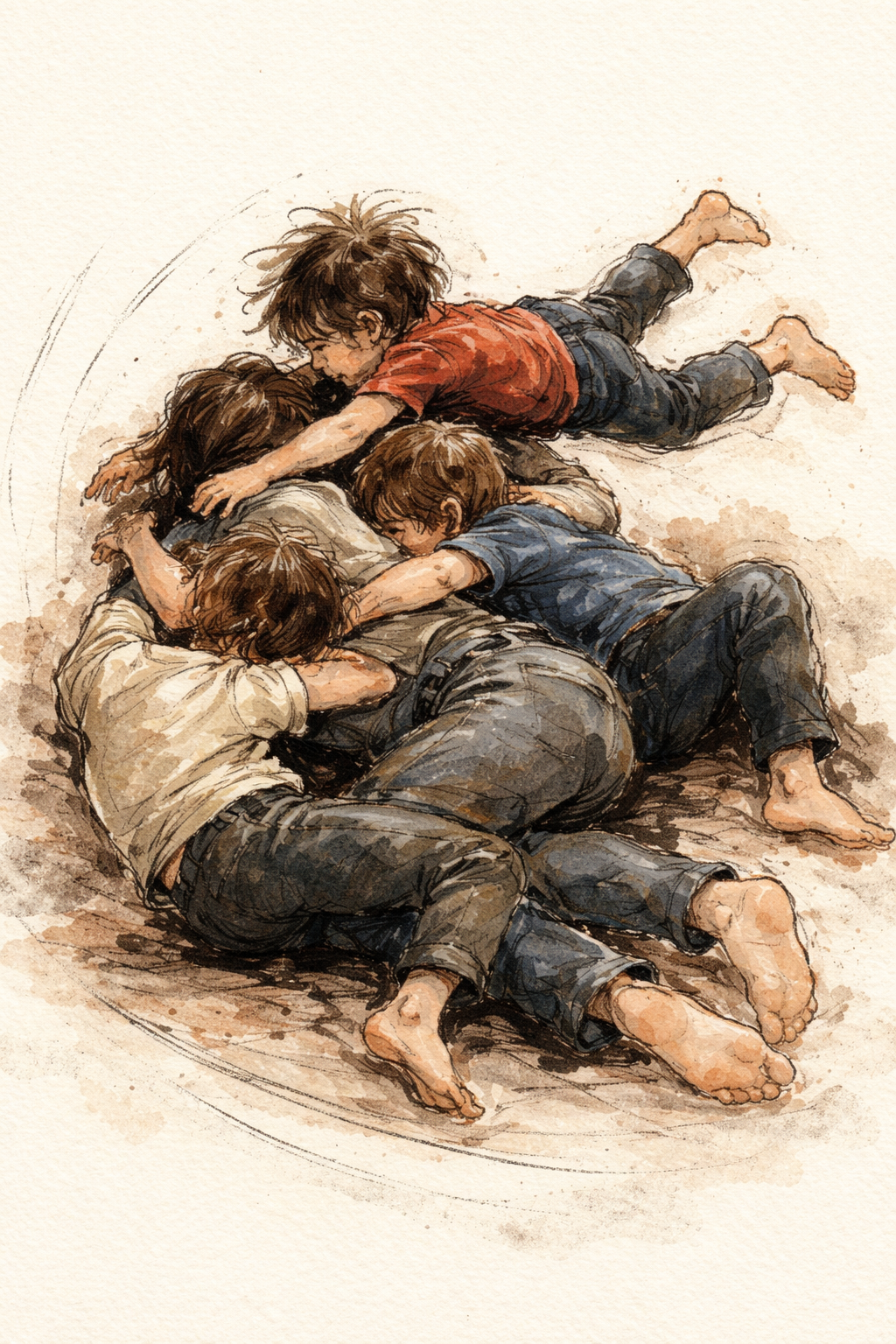
But then, I kneeled to greet my three oldest sons who were playing on the family room floor. And they hugged me with a type of love I’ve never experienced.
They vaulted onto me. Their love was urgent and rough. It was unbridled, given with no limitation. It was cut roughshod, reckless even.
This love they showed me, with all four of us tumbling over the carpet and squeezing our arms around each other, matched the pent up energy of a banshee. This love was not gentle. This love was like a waterfall that could not be dammed. It was like lightning. It was radical and unrelenting.
I have never experienced love like this, where none of us were holding anything back.
As I look back on this, I find great comfort and wisdom in the existence of this radical and unrelenting love. It teaches that love need not be patient and kind. It affirms that love can be this unrestrained.
You see this sometimes at the international arrivals lobby at airports. Families wait for their loved one to emerge from behind a closed door, maybe a soldier returning from a deployment, and they weep in each others arms without any regard for who is watching. They just pour everything they have, all at once.
Shouldn’t we love others like that? Our closest ones of course, but also everyone, especially the least of us? Shouldn’t we show love as if unchained, with a total disregard for self-editing? Isn’t it the pinnacle of love to be so unconditional that it’s relentless?
Love can be a form of lightness, lifting our souls from the earth. But it can come in the form of something radical and unrelenting. To experience both is to experience something perfect.
Impactful Contribution
When I’ve already committed to making an impactful contribution, what will I do?
This image of ikigai has been floating around the internet in various forms for a while.

Source: https://www.performanceexcellencenetwork.org/pensights/finding-lifes-meaning-quest-discover-ikigai-pen-august-2017/
And even though I’m generally skeptical of advice that emphasizes “doing what you love”, I don’t see any reason to criticize the concept the diagram argues for. Those four questions seem sensible enough to me when thinking broadly about the question of “what do I want to do with my life?”
Lately though, in the aftermath of George Floyd’s murder, as protests continue throughout our country, I’ve heard a lot of people ask - “what can I do?”
In this case, the question of “what can I do?” is not a decision where the framework of ikigai easily applies. When it comes to racial equity, if we’re asking the question of what can I do, we’re already committed to issue area and we aren’t expecting to be paid for it.
And this question is common. I have often asked myself, something like what do I want to do to contribute to others when I’m not at work? Nobody has unlimited leisure time, but most of us have some amount of time we want to use to serve others, after we complete our work and home responsibilities. We’re already committed to doing something for others, we just don’t know what to do.
So the question becomes: when I’ve already committed to making an impactful contribution, what will I do?
Here’s how i’ve been thinking about approaching that question lately:
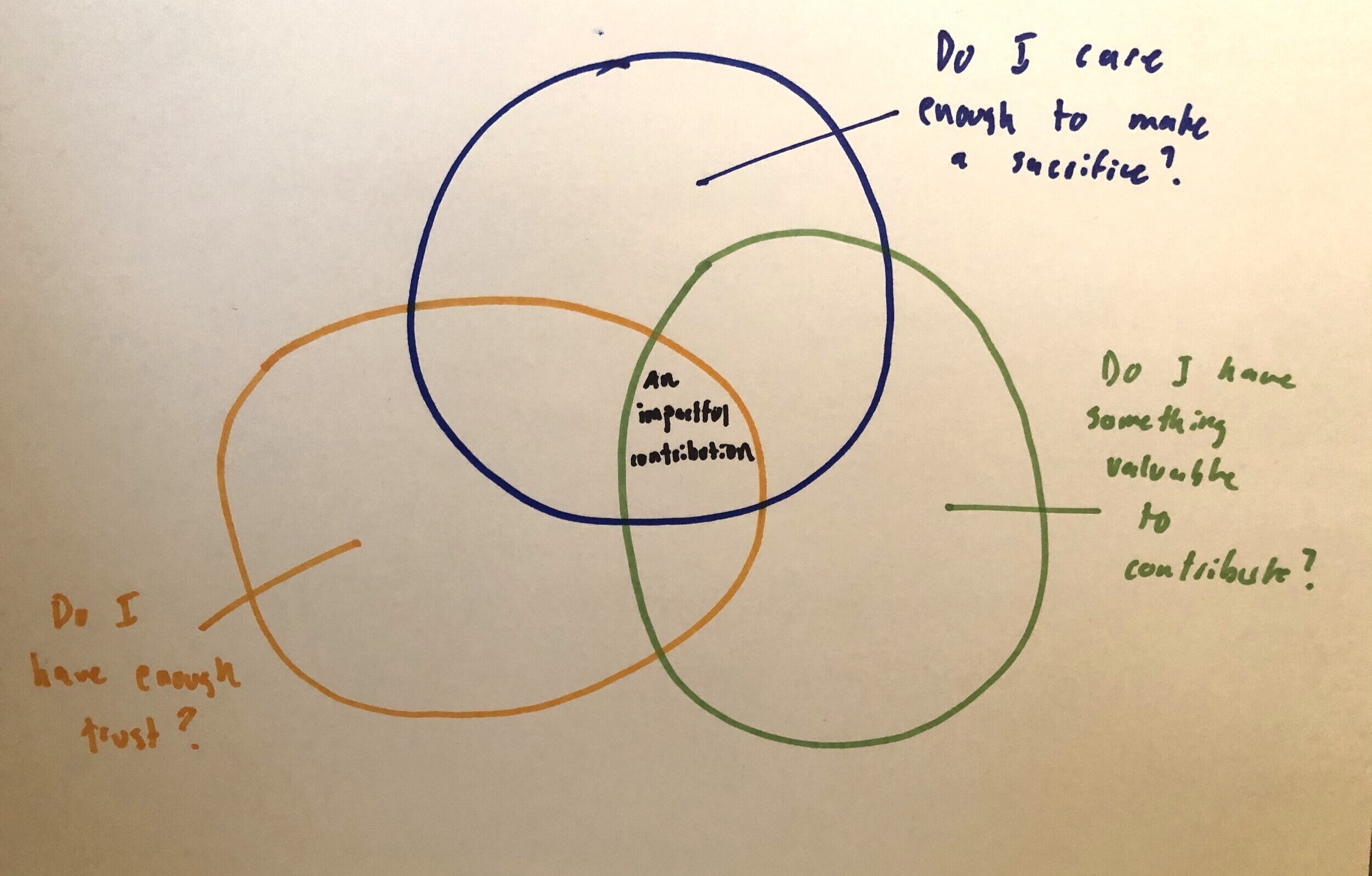
There are three key questions to answer and find the intersection of:
Do I have enough trust to make an impactful contribution?
if so, where?
If not, how can I build it?
Do I have something valuable to contribute?
If so, what is it?
If not, what can I get better at that is helpful to others?
I I don’t know what’s helpful, how do I listen and learn?
Do I care enough (about anyone else) to make a sacrifice?
If so, who is it that I care so deeply about serving?
If not, how do I learn to love others enough to serve them?
Our decision calculus changes when we not trying to determine what to based on whether it will make us feel good. When we’re looking to serve others, it’s not as important to find something we are passionate about doing or finding something which helps us seem important and generous to our peers. What becomes most important is putting ourselves in a position to make an impactful contribution.
Because when we’ve already committed to making an impactful contribution, making that contribution is it’s own reward. We don’t depend as much on recognition to stay motivated. As long as we’re treated with respect, we’re probably just grateful for the opportunity to serve.