

Disclosure on my use of ai
What I use it for, what I don't, and why.
I owe it to you, the reader, to be honest about what I use generative artificial intelligence (ai) tools for, what I do not, and my rationale. This disclosure was last updated on October 4, 2026. I believe this is important so that you have the information you need to assess the intrinsic value, veracity, and trustworthiness of what I create.
DISCLOSURE
I do not and will not use ai to generate drafts, in full or in part, of a blog post or other document. This is the vast majority of the types of information on this website. I do not use ai to generate significant sections or paragraphs of content during rewrites.
I do use ai for proofreading and for suggesting the top ways to improve my posts. I do use ai to render images from creative briefs that I define. I use ai to generate ideas for titles, image concepts, or summary descriptions of posts I write.
I use ai for some things because I'm not good at them (like titles) or can't produce them myself (images). They aren't what I actually care about creating.
I occasionally use ai to help me understand how my ideas compare to other work, or to understand previous work done on a subject area I am writing about.
RATIONALE
I tried using ai more significantly for drafting, experimentally, in late 2025 and early 2026. But no longer. Here is why:
I didn't like it. No matter how much I tried, my voice and style were lost. The words I chose and the turns of phrase that provide nuance were washed away. My work was no longer authentic and it wasn't fun for me to publish something that didn't feel like my voice or my ideas.
I had to decide what I wanted to be and I decided I wanted to be an artist. I don't publish for commercial purposes. I don't do this for volume. I don't do this for the clicks or to sell ads. I do this because I have a point of view to share. I have something to say. I cannot be an artist if I concede the primary creative act to ai, or any other person for that matter.
There are deeper questions and beliefs at play too. Ai copies from the works of authors I have not paid, and that I cannot even cite. There's also the question of blurring truth and responsibility. I can't regulate the nuance of what I say or own up to it, if I let ai write it. And first and foremost, I believe the world needs novel ideas, that are brave and also strange. Ai cannot do that, because it does not have lived experience. It does not feel. It does not suffer. It does not desire anything. It does not imagine and it does not die. It does not seek free will nor can it be granted it.
And there of course is the ontological discomfort. Should we be conceding the act of creation to something that cannot suffer and that we cannot control? Why would I willingly give something so sacred and divine up? The act of creation is a humanizing act - it makes us more fully alive. Similar to love, joy, sex and reproduction, friendship, learning, experiencing the natural world or our faith in God. I want to give ai the parts of my life that are dehumanizing, not the ones that are most humanizing. To give up what makes us human is dangerous and has far-reaching consequences - some that are obvious to predict (a plummeting of meaning) and others that are not.
I am of the belief, after much reflection, that anyone - especially artists and any person or organization that serves people - should disclose how they use ai - so the audience and the customer can judge for themselves, decide whether they want to engage, and determine if the use of ai is humanizing or dehumanizing.
That is why I disclose this to you.
With love from Detroit,
Neil
I Need You
On learning to say the hardest three words.
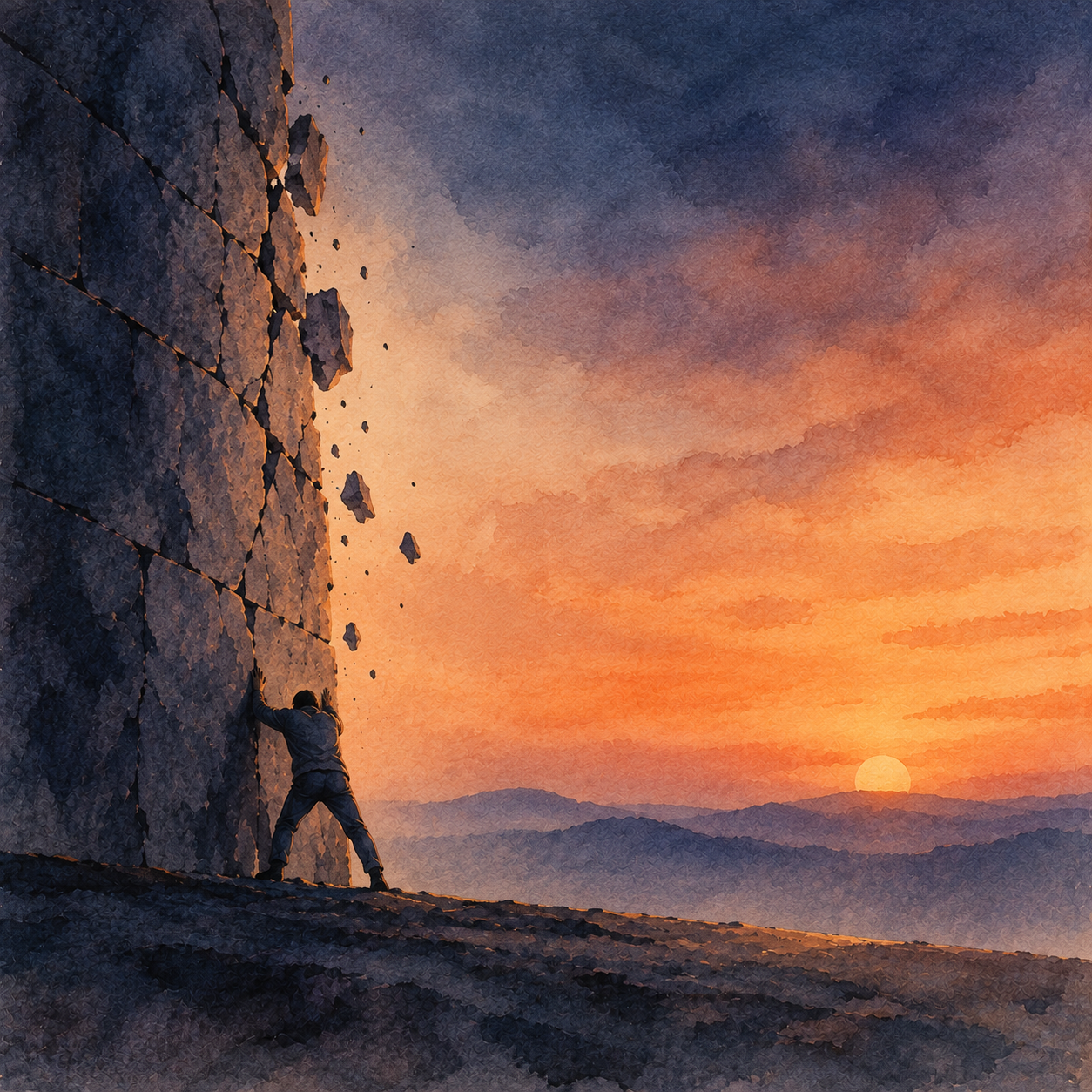
I don't like to depend on other people, and this is deeply programmed within me.
I want to be the one who gives, who has the capacity to help others and has the willingness and means to be generous. This should not be surprising because this is taught in both American and Indian culture. We're not supposed to be the ones who need something, we're supposed to be the ones who give back. We're shamed if we need to leech off the efforts of others and are lauded if we're the ones who invest in others.
Part of this comes from a place of virtue - the community gets better when we all give more than our fair share. But I am grappling with the reality that part of this is also a myth.
I cannot be the strong generous man who gives all the time. And at this point in my life, I am struggling. Every aspect of my life is hard, and I don't have the capacity to help others. Rather, I am the one who needs, and it has been emasculating.
The myth is that the world is separated into the needy and the generous as if it's static. That the haves always have and the have nots always need. No person can give all the time, our lives ebb and flow. No one person can always ebb or always flow. At this point in my life, I am taking a lot and giving little. I have felt shameful about it for a long time, honestly. The calls I wasn't returning, the deadlines I was killing myself to hit and still missing. The progress I wasn't making in the places I volunteer, and the backyard parties I wasn't planning.
My whole life I have been the guy that is always there, the one who could always figure it out. The one everyone could lean on.
And now, I'm not, and the reality that I'm not a super person has been hard to swallow. But perhaps this is the most important life lesson I could possibly have. That I am not a super man, and I never was - that I am simply a man. Simply a simple man. Who can give but who also must need. Someone who can ask to lend a hand, but also ask for a hand.
It has been the hardest and most humbling thing to be able to learn to say to my friends, my parents, to my family, my colleagues, my neighbors and to God: I need you - please, I need you.
It was so hard to ask my mom to come help take care of my kids while Robyn was out of town, or my mother-in-law when Griffin was in the hospital. Or when we had to ask a group of friends if someone could take Robert to soccer practice. And yet we did. And others accepted our call for aid, without levying an ounce of flesh from us.
I am learning this now at 39, because I never learned it in childhood: I am just a man, nothing deficient or super, just a man. And for a man to survive in this world he must give and also must take, that sometimes we are haves and sometimes we are have nots. Sometimes we can ask - do you need a hand, but to be human is to know that sometimes all we can say is I need you.

I’ll Pay You to Lie to Me
We blame the snake oil salesmen. But we're the ones signing the checks.
When the used car salesman says "you're getting a great deal on a great car."
When the politician gives the rousing speech at a rally saying "the problem isn't you, it's them, you don't have to make sacrifices."
When the project manager tells the executive "the project is on time and in budget - nothing to worry about."
When the marketer tells the parent, "buy this and your kids will be healthy and happy."
All these times are when we - the customer, the client, the citizen - want to be lied to. So they lie to us, because that's what we want from them.
We pay them for it. Hell, sometimes we're desperate for it. We demand that they let the ruse continue, because it's more comfortable that way. And it gives us someone to yell at and "hold accountable" as we hide from responsibility.
Budgeting makes this real. When I budgeted loosely as a twenty-year-old, I drained my money at the bar. When I got YNAB, a great budgeting tool, it became a lot harder to lie about money to myself. When my budget was honest, it was very uncomfortable but it changed my behavior.
When I really saw how expensive childcare, food, gas, and home renovations were, I became my dad real quick. I didn't buy new clothes until they had holes. We ate out much less. My subscription of cool, guy stuff? Canceled.
Or there was the time I hired a contractor who repaved our driveway. He gave me a great price and promised timely service, with high-end steel rebar to stabilize the concrete. Exactly what I wanted to hear - and I didn't even research whether what he proposed even made sense.
But then, he used the same lower grade wire mesh as the other quotes I got, did sloppy work, and took an extra three days to complete the job. I paid him to lie to me, and he happily obliged by taking my money and doing less than he promised.
I often blame those lying salesmen or those corrupt people, or the incompetent professional, or the greedy marketer for my problems and the world's problems alike. But if my behavior insists upon, rewards, or even begs people to lie to me, the real problem is me.
We should not expect change, if we pay people to lie to us and then blame them for our problems.
The Extraordinary Day
I feel the gravity of 9/11 much more now. It was a day of extraordinary loss, courage, bravery, and mercy.
September 11 was an extraordinary day. It wasn't a good day, it was awful. But nothing about it was ordinary.
It was a day with extraordinary loss. It was a day filled with examples of extraordinary courage and bravery. But as I've aged, I've understood how extraordinary it was more deeply. When it happened, it felt like something at a distance, that happened to those people over there. I didn't know anyone who was directly affected by 9/11.
But now, it feels so much bigger. To have a mass murder numbering in the thousands is incomprehensible. 2,000 people feels so much bigger now than when I was in high school because I better understand the gravity and consequence of a single life.
I understand now, too, that there were people across the spectrum of humanity that perished - there is someone relatable to all of us that was lost on that day. There were wealthy businessmen and the people who cleaned the offices. Young kids interning, and people who just happened to have a business meeting that day, who were from out of town. There were first responders and priests. There were young and old. People who probably had just returned from their honeymoon or who had just welcomed a child. There were people there from all over the world.
Everyone of those people, I understand now, had an extraordinary story in one way or another, because everyone has an extraordinary story. More than 2,000 people who left their families devastated when they left. 2,000 plus people isn't just numbers - it was an extraordinary loss, which I didn't appreciate 25 years ago.
What got me much more deeply this year was remembering stories about United 93. There were people who called their spouses from the plane. Who took a few minutes to tell the love of their life, that they were going to try to take over the plane, letting it be unspoken that they would probably die. They called to say "I love you." And give their partners a chance at closure, and a chance to move on with their lives. A chance to avoid life's biggest wound - not saying goodbye.
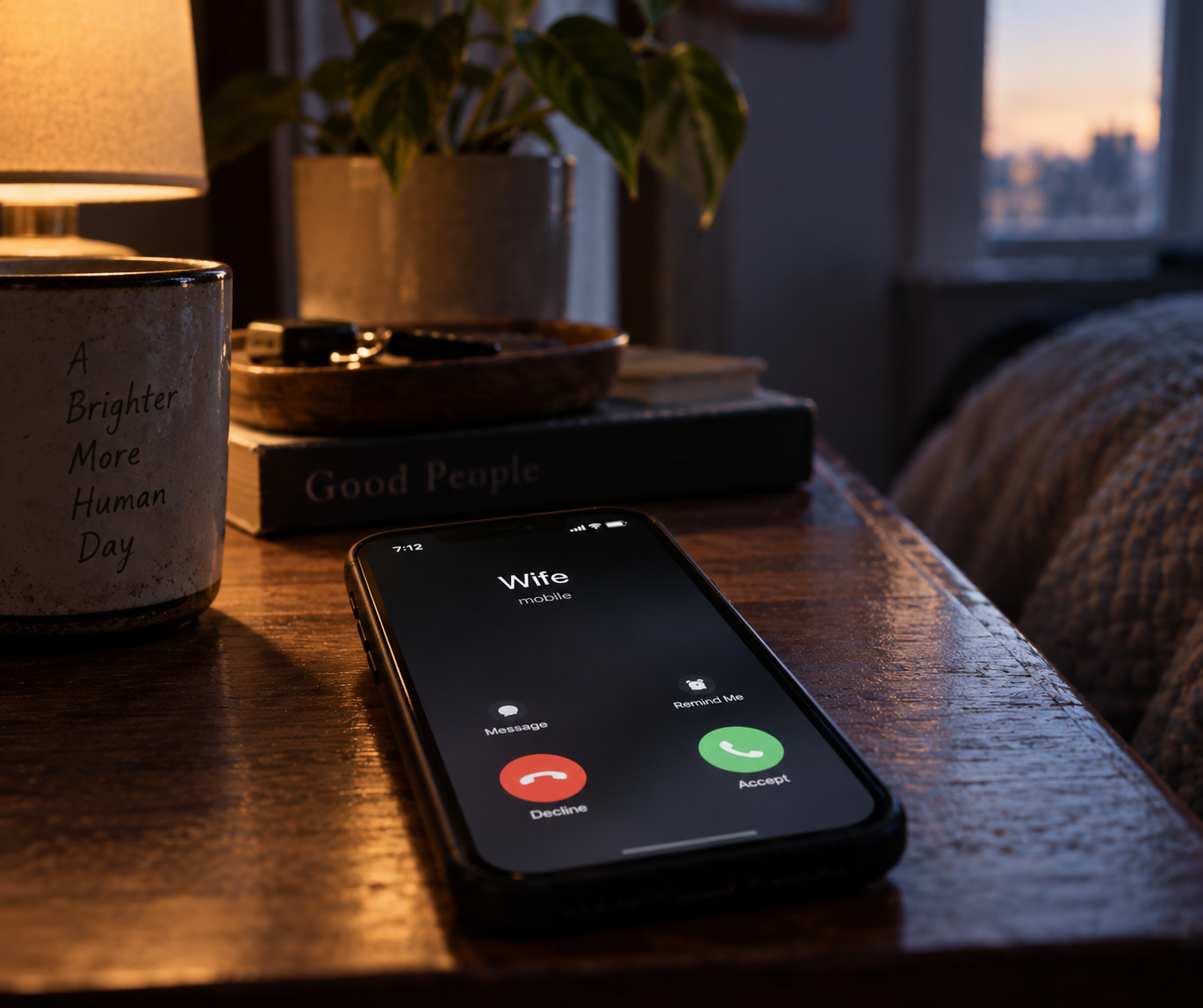
It is something that haunts me. I didn't get to say goodbye to anyone close to me that has died. Not my cousin, Nakul. Not my grandparents. Not my father. Not my friend Wyman. These are among my life's biggest regrets, because I cannot say I love you to them now. I missed my last chance to tell these people, with the realest honesty and warmth how much they meant to me.
What an extraordinary act of mercy that is, to love and try to say goodbye - when you know your life is about to suddenly and tragically end. When you have minutes left and you call someone else not only because you want to talk with them one last time, but you know they would want to talk to you. It is selfless and brave. It is of the purest love. It is heartbreaking. And it most certainly is extraordinary.
I feel so much more sorrow and loss for my fellow countrymen at this 25th anniversary because as I have aged - and loved and lost - I understand the preciousness of a single life, and of mercy much more deeply. I know love and I know death and grief. I know what it feels like to know that you would die to protect your kids and your wife. I know the unsettling driving feeling to want to say I love you, just one more time. I know the joy of family bonds and what it feels like to be redeemed from loneliness.
The stakes of a life are so high. Even one life can be so rich and deep. Just one life, is self-justifying. One life is extraordinary. 2,000 plus lives, to lose that in the span of hours is loss so large that there is no other reaction than to be numbed to it.
I hope that is one of the lessons that we take away from 9/11 and that people, like my sons, who weren't even born when it happened, remember. I hope, beyond the geopolitics and the stories of bravery and courage, we remember the mercy people shared in the darkest of times. I hope we remember the immense loss that one life is, let alone more than two thousand. I hope we remember that every life is extraordinary.
Every Day There Are Little Mournings
Why I’m grateful small moments of loss.
Every day there are little mournings.
Every day I am one day older, closer to the death of my body at least. I’m closer to departing my wife, and when my kids leave the house. I mourn this.
I mourn too, the end of summer. I grieve over the wonderful salad I ordered at lunch yesterday, and that I can never experience it for the first time again. I mourn the joy that will never be just as it was again, when we all read Caps for Sale at Griffin’s bedtime and he giggled with his whole belly over the “tsk-tsk-tsk” impressions the entire family was doing in his bedroom.
Little mournings are not that of a big, lightless death, but of the little things that come and go but are now gone.
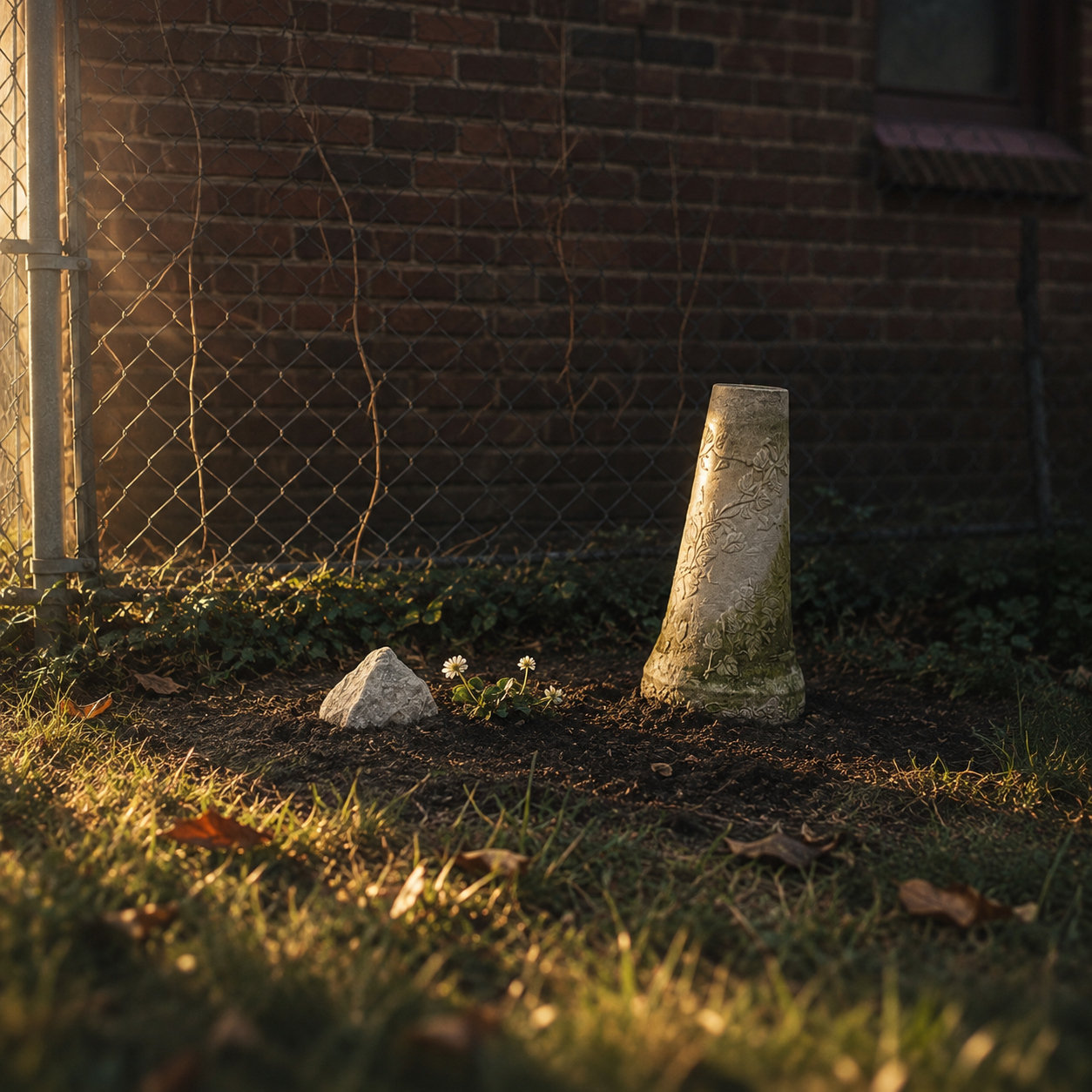
I mourn today the three baby squirrels that fell from their little hiding spot at our garage. We buried them in the backyard with a small stone to mark their grave. I wept because even though they were in no way mine, they were still children. That I mourned these three felt peculiar, but was somehow a relief. It was almost as if I wanted to mourn something, for its own sake.
The act of mourning is one of the realest, unmediated moments of a person’s life. It is simply the mind and body fully immersed in sadness and expressing love at the same time. It is a moment when emotion pours out of me, heaping into my folded hands.
I need the little mourning. It pulls other darknesses with it, out of my heart. It is grounding because the feeling is not performative or AI-generated, distracted, or hurried. The moments of little mourning are followed by brief, perfect, serenities.
Today my little mourning was these squirrels, I prayed and wept for them sincerely. Those tears also washed away at least a little of my hardest work stress. I forgot for a moment, about the world’s injustices against the vulnerable, or the guilt I feel about the chores I haven’t done for my family. The mourning started with sadness but ended with an expression of love. When I put the shovel back in our garage, there was peace in my heart.
I resisted these moments of mourning for so many years, preferring a stiff upper lip. Little mournings, I welcome you now.
I welcome the little moments of grieving and suffering, that make my heart more open to be filled with light and peace. These little moments of mourning, bring little moments of suffering, sure. But from these little moments of suffering come slightly bigger moments of peace and relief.
Just Try To Rip My Legs From This Ground
On refusing the gremlin who insists I’m never enough.
The gremlin — my dark alter ego who always wants more and believes I’m never enough — is lingering outside my front door. I sense him knocking, demanding to come inside, and I can’t let him in. I can’t go back to when he lived, rent free, as my captor.
“More!” he used to say, brooding. “There are people younger than you who have advanced further. Be afraid of how your savings will be wiped out in a crisis. Your colleagues think you’re weak. Your friends are going to lap you — I heard them talking.”
“Robyn and the kids deserve better than what you’re giving them. Your parents sacrificed everything they knew to come to this country, and you only have this?” he whispered, with disgust.
“You’re not even close to where you need to be. More, more, MORE!!!”
The gremlin doesn’t just want me to keep up with the Joneses — he wants the Joneses to have to keep up with me. As if the only way to stay safe in this world is to be “superior” to others, whatever that means.
How do I stop him? How can I banish him again?
To send him away the first time, it took a decade’s worth of reflection, study, and writing. My book, Character by Choice, is the fruit of that labor. But it won’t work to banish him again through contemplation. I can’t write letters to send him away this time, I tried that already and he’s back.
I need an anchor that lets the gremlin know I’m standing firm — that I’m committed to the life I’m living and content enough to grow at my own, sustainable pace. I need roots that keep me grounded, that help me close doors, and that keep me from falling back into the trap of “more, more, more” because I haven’t articulated what “enough” is. If he sees that I’m anchored and can’t be kidnapped…he will leave disappointed and empty-handed.
Robyn is an anchor. The moment I proposed to her in Campus Martius Park was the moment I committed to a family-centered life — when she said “yes,” I said no to a career of chasing titles, moving across the country, and even running for office. Our home is an anchor. It’s small, and even if we had the money for a flashy renovation or fancier cars, it wouldn’t be valued by the culture of our relationship-oriented neighborhood.
Faith and our church community is an anchor. Our parish emphasizes being welcoming, and actively rejects a culture where piety is compared based on appearances or social status. My sons are an anchor. They constantly prove to me — when they ask to play a game, or ask me to stop working — that my undivided attention is what they’re desperate for, not my money or social status.
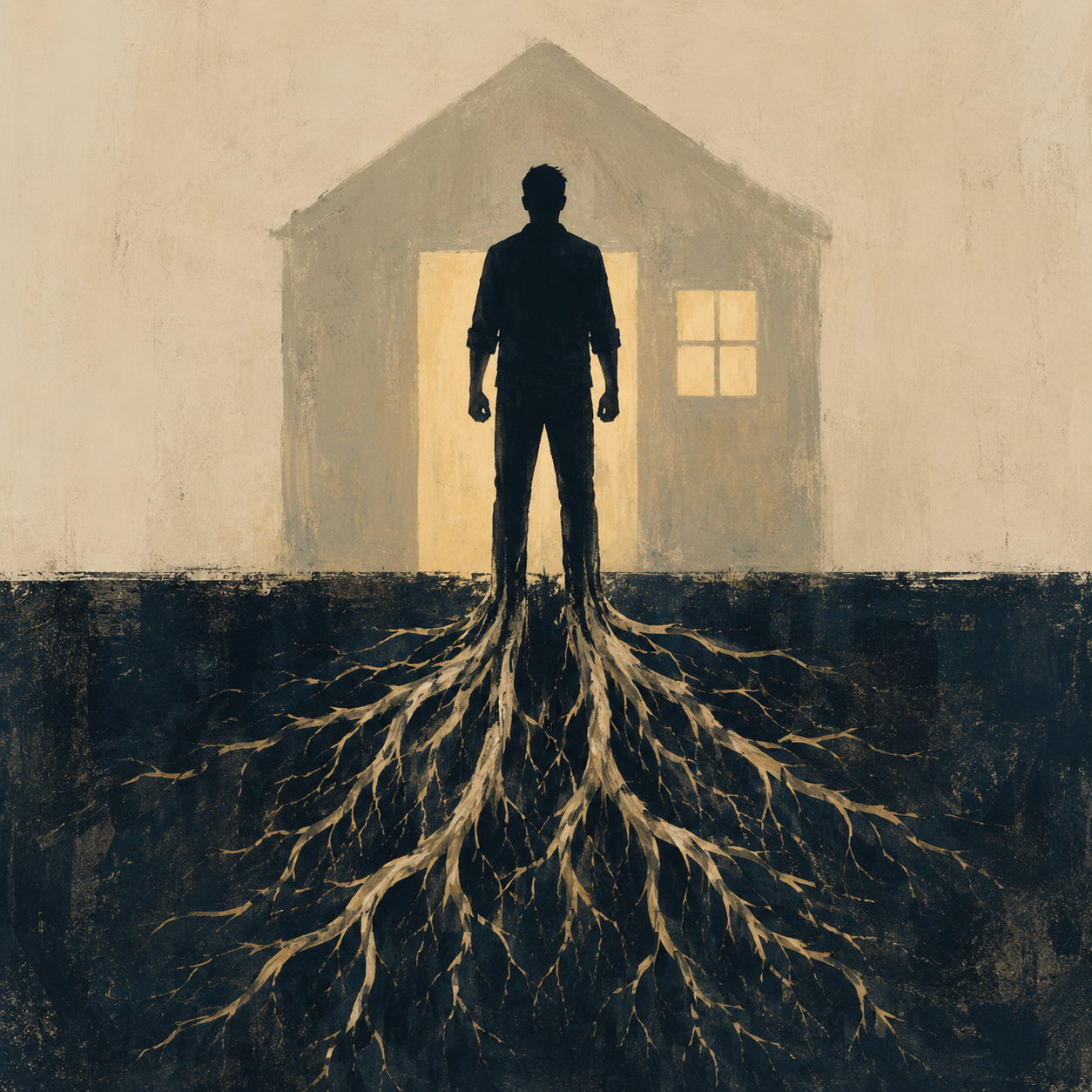
These anchors are not words. They are not cheap talk. They are expansive actions. They show the gremlin that he should take a hike — that I’m not giving up these things, not trading them for more. If the gremlin wants to take me on a different path, he will have to rip my legs from the ground and carry me there.
It’s hard to find examples of this among people my age, so I looked to the natural world instead. The ability to be rooted is why I am so in awe of trees. They stay put, and branch outward above and below the ground. They can withstand wind and storms. They stay steady, committed to where they are, enhancing the ecosystem around them with their shade, the air they purify, and their ability to stabilize the ground. You have to rip a tree out of the ground to take it away. Trees are the epitome of rooted.
And I can remember this, and feel this rooting in my body every day. When I embrace my wife in the kitchen, afraid of the failure I’ll be reminded of at work, I’ll feel my feet planting firmly into the tile floor. When I sit with my kids on the couch in the few minutes we have before bedtime, worried about whether we’ll have enough money for Catholic schooling or Griffin’s long-term care, I will feel my back rooting into the cushion and my arm intertwining with their shoulder. When I am in the pews of the church, praying that the Lord lets me lay the pressure I feel to be more, and the heaviness of my responsibilities, at his feet for a little while, I will feel my knees burrow into the ground below me.
In these moments, I will let this feeling in my body remind me that I am anchored, like the trees are. The gremlin will not walk through my door and take me captive, as he once did — because I will be rooted.

An Empty Sink, But No Relief?
On dishes, grace, and what actually deserves our hurry.
In our family, dishes are my job. And they never end, because we have six people and we cook almost every meal we eat. And dishes cause me so much stress, because you can’t really NOT do them — our sink is small, the food sticks when it dries, the flies come in the summer…you know these reasons and more.
I feel an unusual, perhaps unhealthy amount of relief when I can retire for the night with a mostly clean kitchen.
But not this week. Robyn took the kids up north and I couldn’t take the time off work, so I stayed home with our dog, Riley. I didn’t need to run the dishwasher once. But there was no relief.
I wanted to see them, hug them, talk to them. I missed them, so intensely. The image of an empty sink was a gnawing, perpetual reminder that they weren’t home.
I met some dear friends for dinner this week, and my friend Katie was talking about a simple wish: not having to hurry through everything. Because even though chores are annoying, the feeling of hurry is what makes the daily grind insufferable. Doing dishes is easy, I’ve done it thousands of times and I can do them without mental effort. Packing lunches is similarly easy. Doing laundry is easy. Taking the kids to soccer practice is easy. These are not difficult things.
But we are pressured to do all these in a day, on top of jobs that many of us are tethered to through phones and laptops we are never more than 100ft away from. We move from one thing to another as if every task in our life were a medical emergency. Because we cram, we are in a perpetual state of hurry — and the hurry is the dreadful part.
It became so obvious to me that a sink full of dirty dishes, and the hurry that comes with it, was worth it ten thousand times over if it meant my family was home.
What if I could relieve some of the crammed pressure I feel?
I can give the kids some grace even as I ask them to clean up their perpetually messy bedroom. I can give them some grace that our front hall looks like the Tasmanian devil tornadoed through with their shoes and backpacks. And I can give myself some grace if the dishes aren’t done sometimes.
Because that grace is what creates the space for some joy — for five unhurried minutes, for being with Robyn, or the kids, or Riley, or friends, at a natural pace instead of one dictated by Zoom calls and deadlines. We cannot let the hurried, frenzied pace of our culture rule us completely. We have to do the dishes, sure. But the relief of an empty sink is incomparable to the joy of five unhurried minutes with the family who made the mess.
Exploit or Include
The simplest moral test.
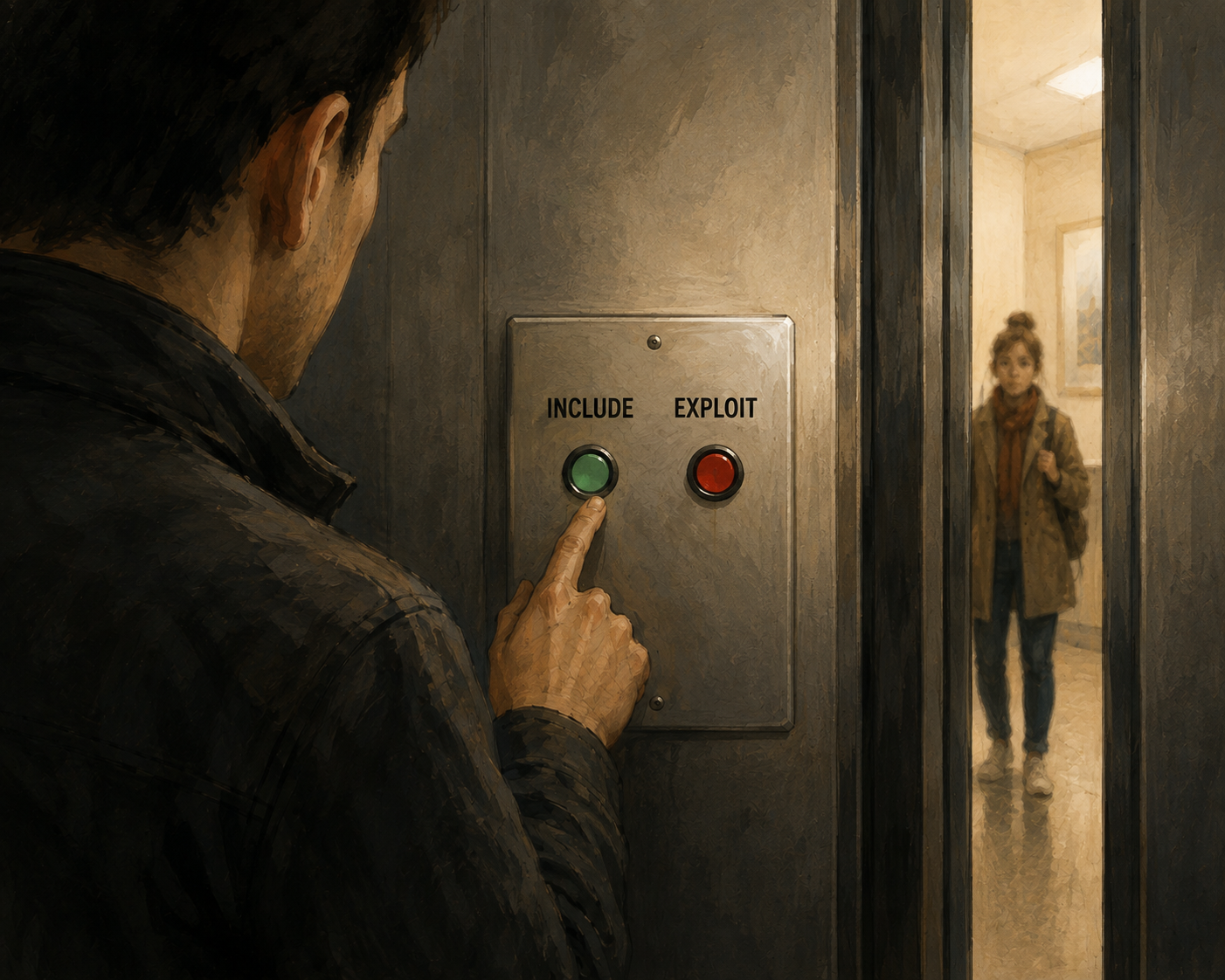
I was in a Costco checkout line with my father, probably 15 years ago. If you knew him, you knew his Indian accent never really faded. You also knew he was a serious, educated man — multiple master’s degrees in engineering, and a PhD he would have finished if he hadn’t needed to support my mother, in a country they’d both just immigrated to.
He was just standing there, paying our bill, when the cashier started talking to him like he was a child. Like he had the intellect of a bushel of corn. She talked down to him because she could — because he was a minority with an accent, and she wasn’t. I suppose she may have been having a bad day, or was just a foolish teenager, rather than being a bigot — but she still stole his dignity, and I saw this happen to my parents countless times when I was growing up.
That’s what exploitation really is. Finding someone you can treat badly without consequence, and doing it anyway.
There are certain people we’re all allowed to treat this way without reproach. It’s just a matter of who. Wait staff, customer service agents — anyone in the service industry, really. Any minority, whether by race, religion, sexual orientation, or age. People with disabilities. Foreigners. People without a fixed address. People without a college education. People in poverty. Interestingly, it’s also allowed to treat wealthy people badly. Sometimes the reasons are obviously contrived, like a middle school bully picking on a kid for wearing glasses or the wrong brand of jeans. Or, in the biggest farce of ego and power of our time, we’re allowed to treat people who work “under” us in a corporate hierarchy badly, with limited consequence.
I’ve come to think of these exploitations less as a long tail of isms, and more as one way of being. Call it racism, ableism, classism — any ism is essentially the same thing: someone who sees a chance to exploit without consequence, and takes it. I doubt that cashier was born evil. She just saw an opening.
Inclusion is the opposite. It’s finding those same people we could exploit without consequence, and choosing instead to make them part of us, and us part of them. It’s a deliberate elimination of the opportunity to exploit another person. To include requires us to do something to care for and become equal with another living being.
If you want to know someone’s character, put them in front of someone the culture allows them to treat badly, and watch what happens. Add pressure. Tell them a story about something being stolen from them. See what happens. The tendency to blame, exploit, and demean — or the tendency to take responsibility, include, and elevate — shows up fast. We are put into rooms like these, where we’re allowed to treat someone badly without reproach, every day of our lives
When under pressure, do I exploit or include? It’s the simplest moral test there is. And it’s one we have to run on ourselves every single day.
Detroit adopted me
Fifteen years, and I’m still not born and raised — but I’m home.
Detroit didn't raise me, but it did adopt me.
In 2011, when I moved here, I was a high-functioning person who was very lost, and lonely. I was a great yuppie, but I lived in only two dimensions: work and going to bars on the weekends.
But then when I moved here, I started to grow a life with more than two dimensions. In the past 15 years, this community has given me more than I could ever give back.
Detroit gave me my first grown-up job, a good one at that. I expected to go to DC — I'd interned there every summer. But I stayed because I wanted to be close to my parents. Even my father thought I was crazy to forgo the opportunities of a larger city.
Detroit gave me friends, when we were all figuring out our twenties in a place that was already showing glimmers of magic and resurgence. And it's kept on giving: more friends along the way, whether by luck at a bookstore or through our sons playing sports. I get to live in a place where I know people around town. Just last week, Robyn took the kids to the Rocket Mortgage Classic and bumped into a neighbor and two of Robert's soccer teammates.
Detroit is an amazingly interwoven big city, where people actually live in community.
Along the way the city taught me to serve. First with pro bono work for non-profits. Then working for the City at the Police Department. Over those years I went from a boy with hubris into someone with a greater understanding that service requires humility and listening more than achievement.
And at the most unexpected time, I met my wife here — through the friends I made when I first moved here. The old St. Cece's in Corktown is where we met, on a St. Patrick's Day pub crawl our crew organized, the day I was so happily drunk I started imitating a toothbrush. The city helped us find our way to dating, then let our young love grow and blossom. We married at a beautiful church downtown — Ss. Peter and Paul — and had a barn burner of a wedding reception; still the best party we've ever been to.
As a child, this was my American dream: to have a family and live in a place where neighbors cared about each other. Detroit gave us this dream. We have a sturdy old home with a yard that fills with fireflies on summer nights. And we know our neighbors, we stop on our walks with Riley, we trade desserts, and have had them in our backyard for pancakes.
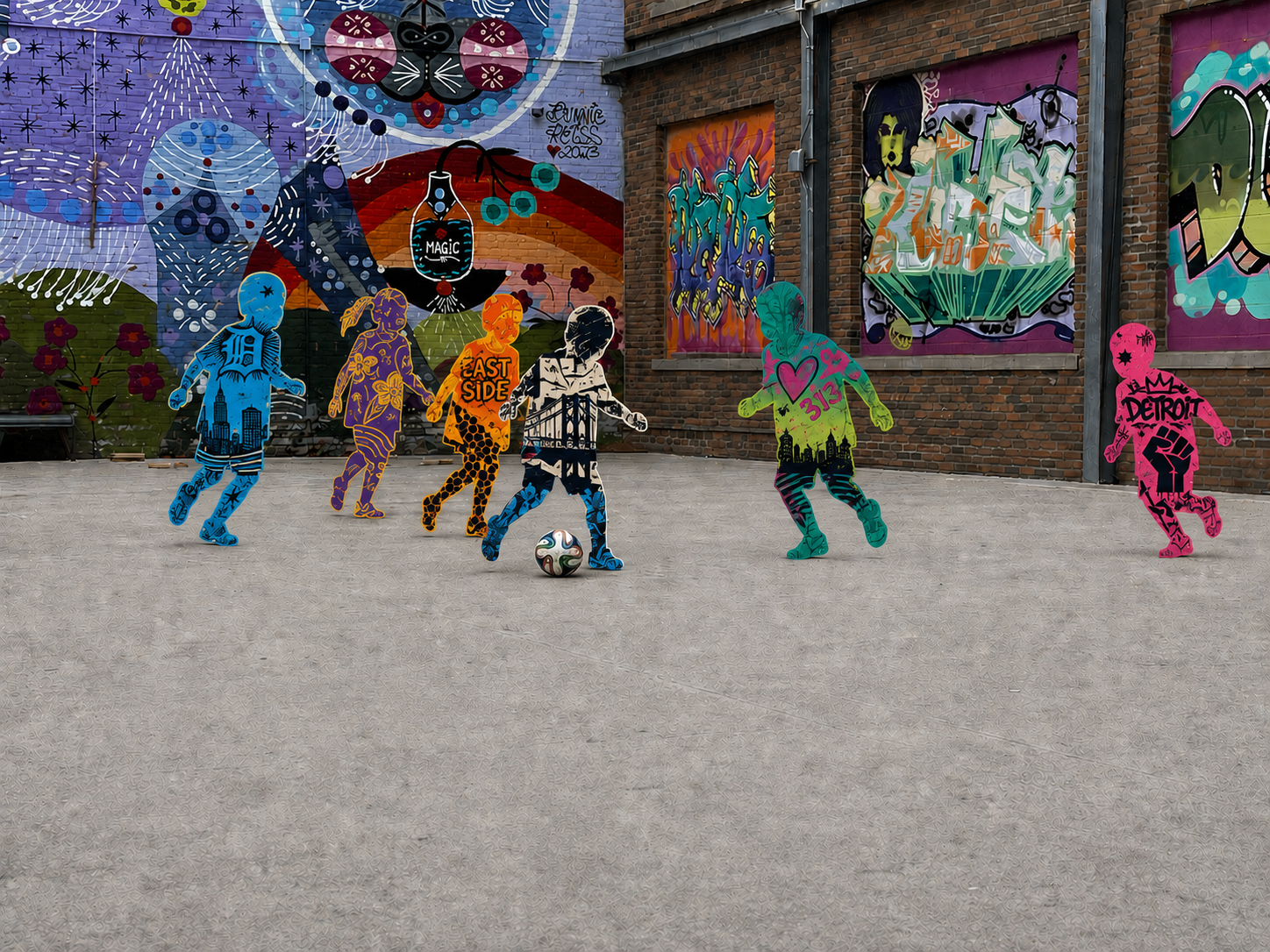
Detroit has given our kids something that seems like it's on its way to becoming extinct: a childhood. Our culture puts adult pressure on kids way too fast. But this City has given us a shot at giving our kids beautiful family memories. They'll remember walking to Good Cakes and Bakes together and playing soccer in art parks filled with graffiti, or under the Ambassador Bridge. They'll remember going to a school in our own neighborhood where they're accepted even as an unlikely racial minority. They'll remember playing tennis and seeing the police horses at Palmer Park, and having a charcuterie picnic on the Riverwalk every summer. This is Detroit's magic.
Finally, Detroit gave me a spiritual home. I was wandering for a long time. Gesu welcomed me as a non-Christian for years. I didn't take communion, but people cared about me anyway. Our children were baptized there, and people look after and pray for us. Eventually, I was baptized there too. People embraced what I carried with me from growing up Hindu, and told me how Christian communities have coexisted with Hinduism in India for centuries. This is a place where I can pray as a man whose Hindu roots and Catholicism coexist. Gesu is where I have peace, can weep, and have fellowship over coffee and donuts. I spent over 35 years trying to find this. Detroit just gave it to me.
I can't claim to have been born and raised here. For Detroiters, that distinction matters. But the City took me, a lonely lost twenty-something, in anyway.
So many people here gave me the care and guidance to build the simple life I dreamed of. Detroit adopted me before I even knew I needed looking after.
Detroit is a city defined by its people and its neighborhoods, more than its buildings or its statistics. It's a hard-working place that finds a way to make it, and to make beauty out of nothing but grit and a prayer. I am grateful that y'all took me in 15 years ago, and let me become part of this community.
Thank you for giving me more than I could have hoped for. I am proud to be an adopted Detroiter, and become part of this place. Thank you for being my neighbors and letting me be yours.
Kindness cuts through
Kindness is hard to forget.
Kindness cuts through the noise.
I’m a bit surprised to be grieving the loss of a colleague I’ve just met. I maybe talked to her 5-6 times. It’s not the same grief as when losing a close friend, but it’s grieving nonetheless.
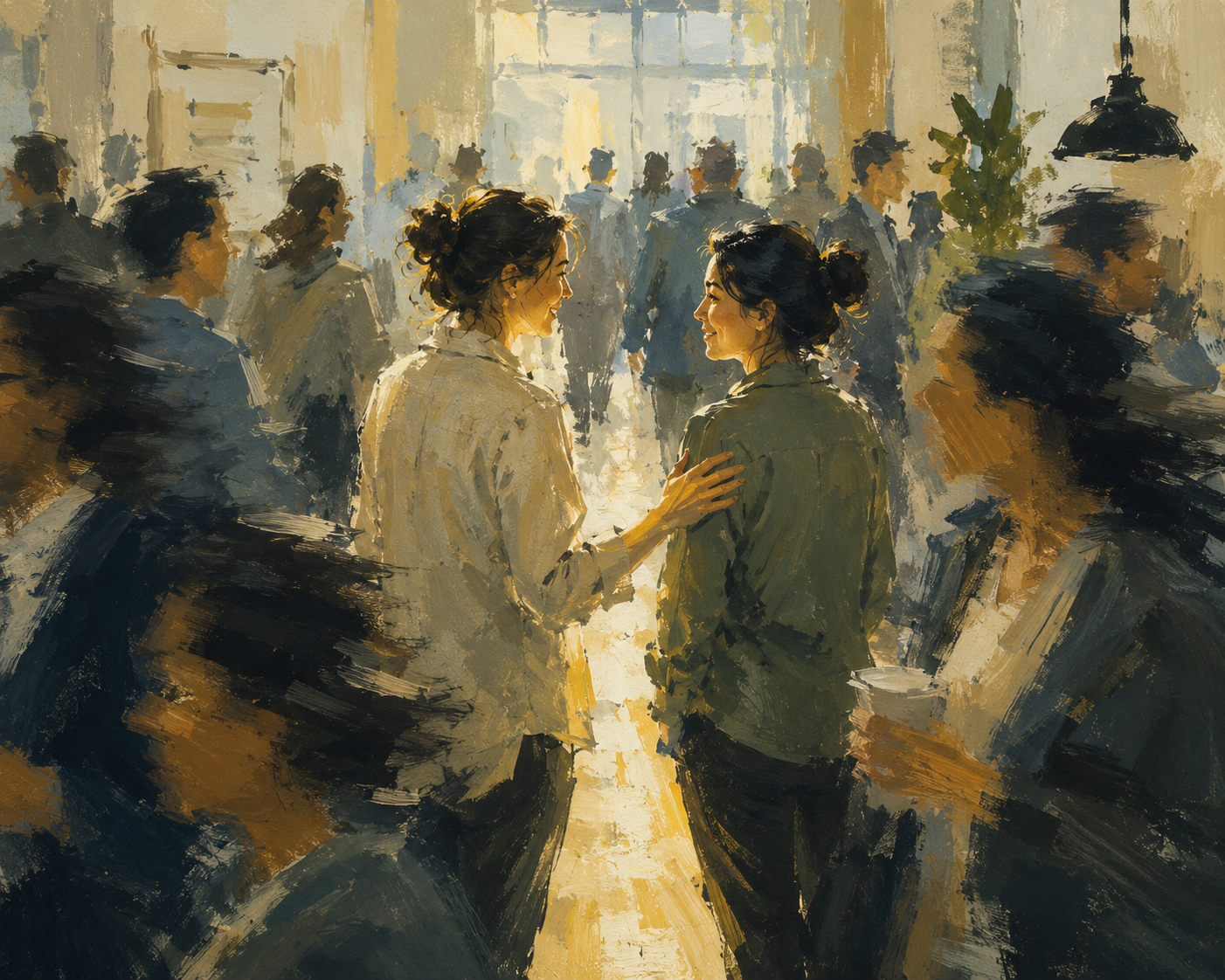
But from moment one, I knew she was kind. And that simple act, of genuine kindness shown by a person with no performance, no faking it, creates a bond.
That simple bond of genuine kindness, given and received, is hard to forget. It is something you remember despite having a busy life, and you hear it even amidst the yelling that never stops from people who make more money the louder they are.
I think that’s the selfish reason why I want to be a good person. Being a good person creates trust and that trust creates connection with others.
But as my ambition for applause wanes, I think I know why. What’s a life without friendship, without bonds? Is it worth it to satisfy ambitions if you are lonely?
That’s why kindness cuts through. When someone is kind to you, it means you are not fully alone.
Everyday Angels
The brutal days keep coming. So do the angels.
It has happened over and over again.
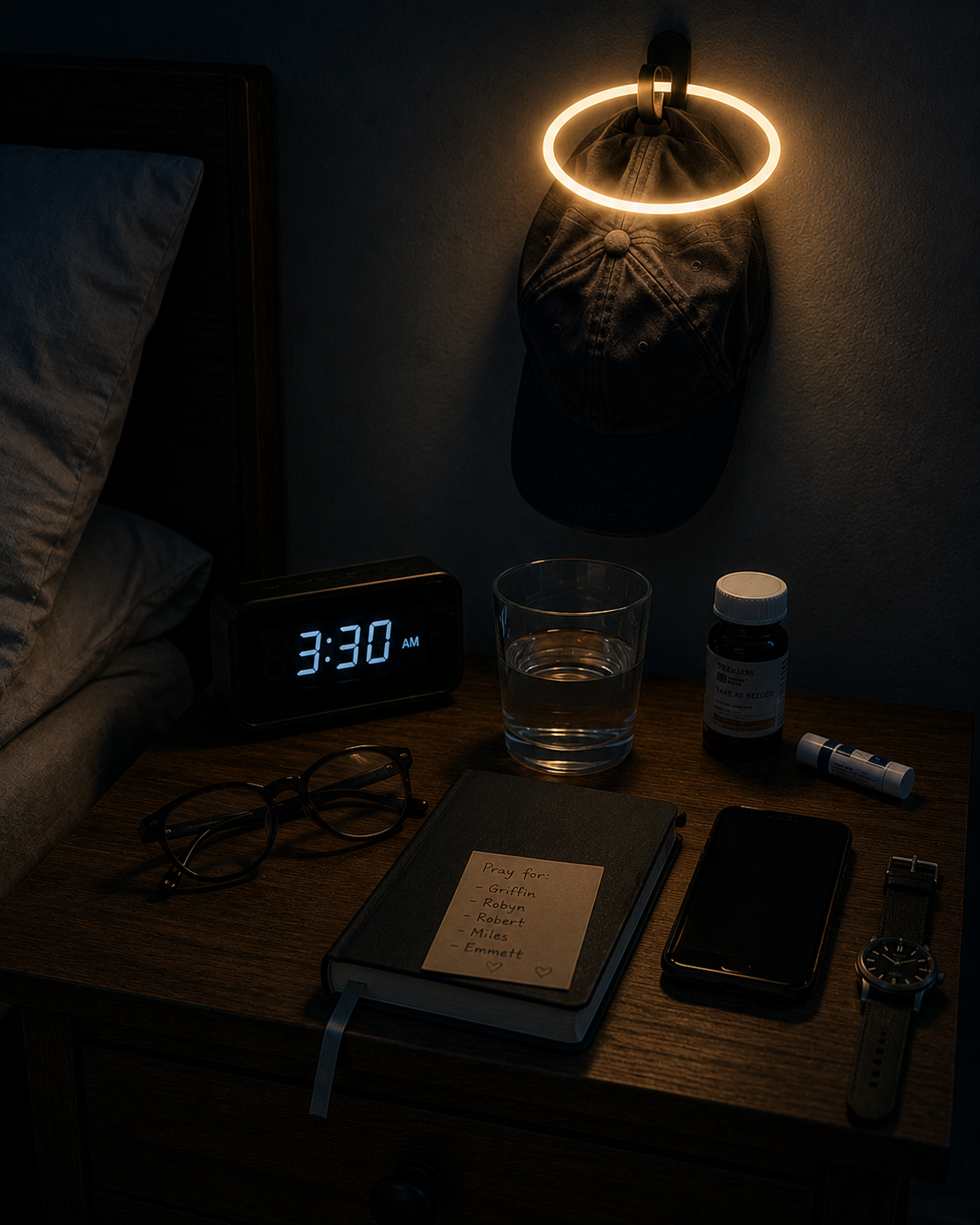
The harder life gets, the more I weep, yes. The less I sleep, yes. I know I’m in a bad way when I am as stark awake as a pig is naked and the watch at my bedside says 3:30. These things come in waves for me and for everyone. The brutal days come for all of us.
And yet, the angels keep coming. This past year and a half since Griffin was born has been relentless with some combination of illness, grief, utterly dogged and pressure-cooking work, or some sort of issue with our home or car. The brutal days can’t stop and won’t stop coming.
And yet, the angels keep coming. Someone calls me out of the blue. Or maybe someone at work or our sons’ soccer team pulls me aside to share comfort and encouragement. Or someone at the grocery store or at the park will just beam because they see something in our family that reminds them of theirs, which brightens their day and mine. Someone will come up to us at church and say, “I have been praying for you.” Or someone in my family or an old friend will just show up somehow, appearing as if through apparition.
How do they know? These people, these wonderful souls, how do they know I need them? How do they know I’m out of strength, many times before I even know I’m out of strength? How do they keep finding me?
I don’t know who keeps sending them. Or why.
But thank God.
—
I feel like an old man now.
Not in the sense of my body or mind — I feel sharp and limber, though I can’t run it back like I used to. It’s that I can’t not wear my heart out in the open anymore. I can’t live as a persona instead of a person anymore. I can’t hold back the laughter or tears or joy anymore.
I can’t hide. From the mirror, from God, from my demons, from love, from anyone. It is only old men who have learned not to hide, and to have learned this from hardship and death, from marriage, friendship, and from four remarkable sons is yet another way I feel I’ve grown up too soon.
But maybe that’s part of why these angels keep showing up. Maybe angels find us precisely when we stop hiding — when our darkness and our light is unhidden. Seeing that tension and dance of darkness and light emanating from another soul is perhaps what draws them near, as if our aura puts out a bat signal if we let it, and the everyday angels all around us see it.
That is perhaps a lesson in being an angel just as it is a lesson in calling one. I have been the recipient of so much love — I hope I can mirror back even a fraction of what’s been poured into me. I hope I can be an everyday angel to someone every once in a while. It seems so selfish and wasteful to just take and take without sharing it back.
It seems to me the key is simpler than I thought. Maybe it doesn’t take a relentless regimen of character development to be a good person. Maybe I don’t have to journal religiously and collect constructive criticism from everyone I can to shape myself into the man of honesty, sacrifice, and devotion my father was.
I think being an everyday angel is much simpler. We open our eyes and ears and hearts. Look for the light and look for the dark, and then just drift toward it. Let our hearts and souls be called. Maybe being a good man, an everyday angel, is really that simple.

His voice echoes
Wyman always used to tell me, “friends of friends are all friends.”
To have a voice that echoes is rare.
It’s not everyone that can say something and it sticks with you for your whole life. There is so much noise, that to express something people remember, turn over in their mind, and share is incredibly difficult.
First, it takes a clear understanding of reality and of people. You have to see truth clearly and fully. This takes great empathy, deep listening, and humility. And then also, you have to be able to distill a profound, stirring, thought so simply and emotionally that it can be internalized deeply by someone else. This takes a brilliant and sharp mind.
But finally, you also have to be trustworthy. People have to know you are honest and have integrity. That you do the right things for the right reasons. Because if you do not, even the most elegant and prescient idea does not spread far — because they don’t respect or honor the messenger.
My friend Wyman was this way. He had a voice that echoes. When I am most confused and feeling most alone, I remember what he said to me often, “ball don’t lie” and “friends of friends are all friends.” They are simple truths that I didn’t truly understand until he showed me.
He was observant, and a true listener. He was humble, empathetic, and had the sharpest and brightest of minds. And he cared deeply for others. The only way I ever knew him to be was someone who treated others with dignity, except for brief moments, maybe, with someone whose team rivaled the Knicks or Michigan.
It wouldn’t be precise to say that I will miss him, because I have missed him. Distance naturally means less time with friends, even ones that are really close. The only consolation is that his is a voice that echoes. And it will continue to, because of the thoughtful, good, and energetic person he was. That wisdom of his, that essence of his life, will remain.

Your Patronus Thought
The simplest way to bring magic to our relationships.
In the past year, the pressure cracked me. The weight of responsibility, the fear of the future — all of it — turned me into a drill sergeant, a yeller, someone who demands order, especially from his own kids. I’d boil over, then apologize, then feel ashamed for most of the morning.
But the simplest little ritual has made the biggest difference in my relationship with my kids. It might be the highest-leverage thing a person can do to build trust and deepen any relationship.
All I’ve been doing is making sure the first thing my kids get from me in the morning isn’t a gripe. That first moment should give warmth — not anger, not contempt, not criticism.
That’s it.
It changes the whole dynamic. How do people feel the moment they first see me during the day? How do I feel, seeing them? Can I be calm, open-hearted, excited, loving — before anything else happens?
Get that right, and it changes everything about my day, and the day of the person standing in front of me.
The secret to making my first moment of the day caring instead of contemptuous is conjuring my Patronus thought.
In the Harry Potter series, a Patronus is a charm that summons a silvery spirit animal to ward off dementors — soul-sucking, hope-stealing demons. But there’s a catch: to cast the spell, the witch or wizard needs a genuinely happy thought. Not something surface-level. Something deep, pure, and joyous.
That’s exactly what I need to remember in the morning, so the pressure that made me a drill sergeant doesn’t turn me into a wallowing grouch instead. When I first make contact with my wife, my kids, my colleagues, my neighbors — whoever — I need to remember a deep, genuine, happy thought.
Mine is: “I have a family that loves me, and that I love back.” I play the memories in my mind — their hugs, their faces, their laughter. When I remember that I’m blessed with a loving family, across kin and friends alike, I can’t help but be calm, loving, warm.
That’s the thought that protects my heart from ice, anger, and despair.
If I had one piece of advice for getting on in this world, it would be this: know, deep in your gut, what your Patronus thought is. Think of it before you make first contact with anyone — before you greet your kids, before your first meeting at work.
Conjure that pure, happy thought, so it shines through and lifts you and everyone around you.
This advice is obvious, but it’s hard to follow. Commercials and culture keep pushing us toward bigger, more elaborate, less satisfying wants. It’s hard to live a simple life.
But I want to. More and more. I think the biggest mistake I’ve made in my life is letting myself want things that are so elaborate and complex — a big job with a big title, lavish vacations abroad, a life where nothing bad ever happens, enough money that no one can ever screw with me, and that every one of my kids becomes a scholarship athlete at an Ivy League school.
That’s a fragile dream. It’s so big and elaborate that it’s a house of cards instead of a home. And we don’t have to want it.
Why we work so hard can be for something simpler. It can be for one genuinely happy thought — one truth that proves to us we can be at peace. That lets us say, “It is a good day. Every day is a good day.”
It’s okay if that’s all we really accomplish. A simple life, with a sturdy foundation, instead of a house of cards.
That’s worth all the work.
18 Michigan Summers
On lingering, before the years fly by.
18 Michigan summers. That’s all the childhood we get with each kid before they fly.
For us that equates to a span of about 25 years of golden days across our oldest son and our youngest nephew (so far). We’ve got 18 left, including this one that’s already half lived.
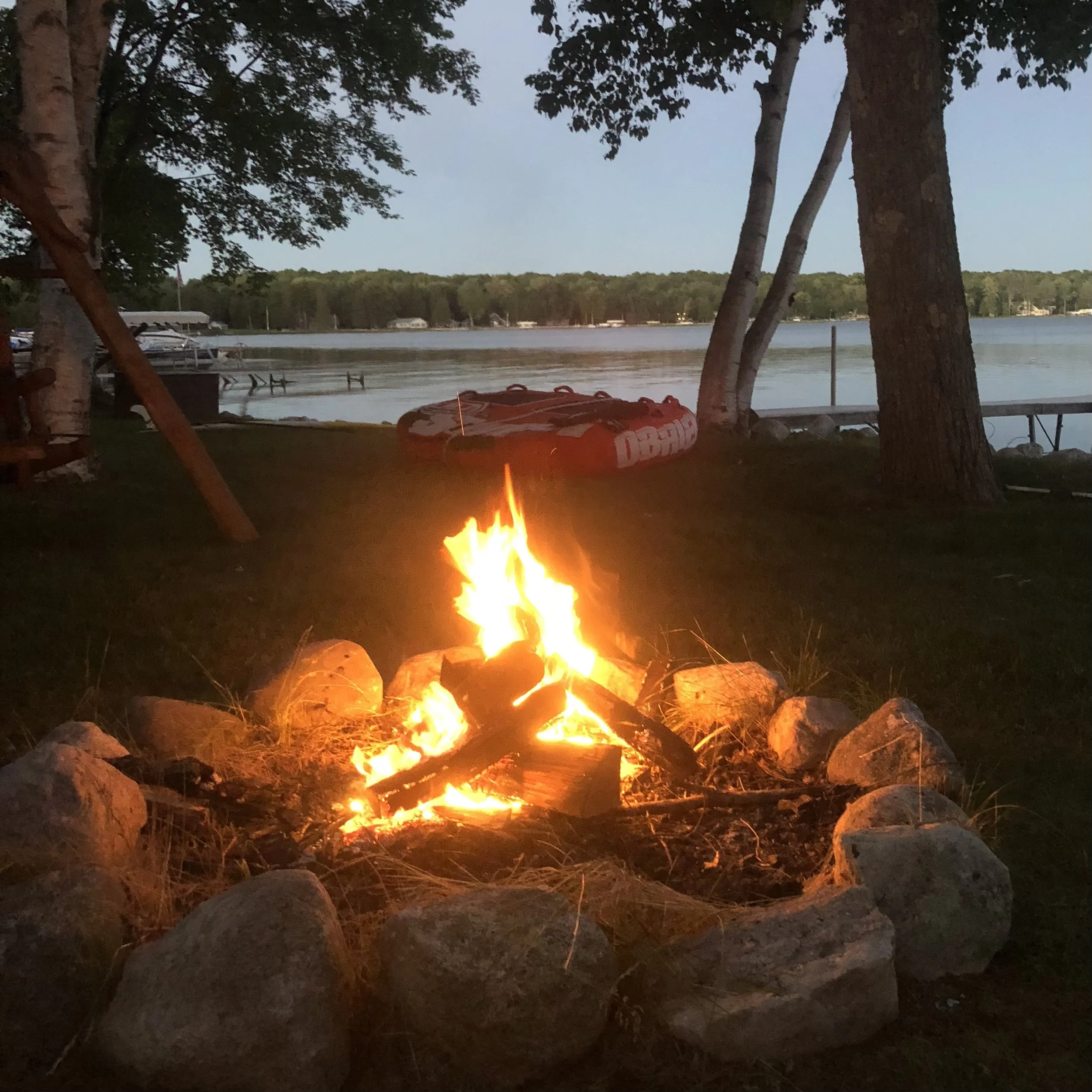
18 more summers of boats and tubing. Of ice cream and s’mores. 18 more summers of backyard tennis and soccer. Of charcuterie picnics on the riverfront. 18 more summers of “cousin time” and a rotation of board games when the warm summer rain is falling and thundering up north. 18 more summers of late mornings preceded by 18 last days of school. 18 more summers of fishing with their uncle off the back of their Granddad’s boat. Of sandals, swimming, golf, and playing tennis at Palmer Park on a whim. 18 more summers snacking on fresh, seasonal fruit in the cool of their Dadi’s basement and munching on their Mimi’s “disappearing” guacamole. 18 more Michigan summers of campfires, hikes, and watching the lightning bugs glow up our little patch of grass in the big city.
We will have more summers than these, God willing, and those will be special in other ways. They just won’t be the golden summers of bona fide childhood.
These summers don’t feel fleeting, which is strange. The rest of our life is urgent, driven by a schedule that constantly nibbles away our time. But this is not. Michigan summers pass quickly, but a full childhood of them unfolds over a long time, in big gulps. It can’t be managed with a calendar and checklists. There is no app for this.
All we can do is savor these times. We can fill ourselves up on those gulps of sunshine and trees and splashes of the lake, holding onto them as long as we can before Labor Day marks the onset of fall. We cannot stop it, but we can linger and soak it all in.
Maybe this is why we have our long Michigan goodbyes — one more chat, an extra hug, before we part from family and friends we already can’t imagine leaving. We linger in the warmth of summer sunshine because we know it ends too quickly. We hold onto those gulps as long as we can, because we know we must.
The truth of our precious 18 summers cannot be changed. This is a truth of life in our lake-plentiful state. But we feel blessed to have them. And if they must be finite, at least we know how to appreciate and savor them.
We are in the car, driving home from our longstanding tradition — a week with family up north over the Fourth of July. My mind is renewed and my heart is full. And it’s hitting me that all we have left is 17 and a half summers. And for Robert, our oldest, less than ten.
That thought could easily sadden me. 17 and a half is not a lot of anything, not when it’s the measure of a childhood. But I don’t keep count out of anxiety. I keep count as a way to linger — to savor these summers before our kids fly out into the world.
a simple man’s wish
…for you to have been fully alive.
For what does a man wish, for the people who illuminate him? For the people whose light makes him lighter?
For you, I wish for tears…
…of joy, obviously, because joy isn’t fully known without tears.
…of awe, because to experience beauty and wonder is one of the few things that makes the suffering of this world feel like an even trade.
…of sadness; an old friend once told me that tears are what heal the soul. It’s true.
…over spilled milk, because we must learn the important lesson that it’s not worth crying over.
…of grief; to know that suffocating void means you also know how expansive and glorious love really is.
…of seeing a child play; the laughter and glee of children is one of the few ways to preview what heaven looks like, sounds like.
…of laughter, because you cannot make it — it is literally impossible — without humor and levity.
…of heartbreak, because only after heartbreak do you understand the blessing of being bonded to — and enmeshed in love with — another soul.
…and finally, I wish you tears of gratitude for all the other tears you have shed that have gotten you here.
To be grateful for the suffering and the joy, even when you lie awake with a stomach full of overwhelm and regret, to be able to pray this prayer though you are silently weeping — “Thank you, God, for I am loved” — means that you have been fully alive.
If I had a trillion dollars
The trap is the same at both ends.
Let’s say you had an allowance of $100 million per day.
To put it in context: $100 million buys a mega-mansion in New York, a fully outfitted private jet, or 400 Bentleys — every day. To spend one trillion dollars at that rate, you’d have to keep going for 27 years and four months. A private jet a day for 27 years.
I can’t fathom that much money. I cannot imagine the freedom or the shackles.
And what would I even do with it? I don’t even need one Bentley, let alone the nearly four million a trillion dollars would afford me. There haven’t even been half a million Bentleys produced, ever.
I heard that the wealthiest person in early 19th century America died from an infection that simple antibiotics would cure today. That’s the real wealth we all share — over time, humanity develops public goods that raise quality of life for everyone.
I love that Barenaked Ladies song, If I Had a Million Dollars. I wonder what I’d do with a trillion. I have no damn clue.
I’d hope that enough would be far less than $100 million a day, because it is now. I like my life. And we’re lucky to have enough and live in a time where entertainment is cheap and people with Down Syndrome aren’t condemned to institutionalization.
Still, I hope that I’d live modestly and use the surplus money to find the next antibiotics, the next sanitation, the next discovery we can’t predict — whatever it is that makes a future generation look back and wonder how we ever lived without it. Something that reduces gun violence, or increases survival rates for terminal disease, or makes energy cheaper and cleaner.
The best use of the money would be throwing it at something I could never predict, and probably never see the fruits of in my lifetime. Which is basically burning it — spending on something with no guaranteed return. I wouldn’t try to “invest” it in anything, because that implies a certain return and is not nearly ambitious enough.
I’d have to waste it, on something that might advance humanity or might be a total flop. All this assuming I could find those people that are creative enough to be worth wasting huge amounts of money on. Which is a weird problem to have.
I just don’t really understand mega wealth, I suppose. Do people that wealthy feel good about it? We aren’t mega wealthy. And yet, I think about money all the time as it is and it’s awful — I can’t imagine what it would be like to have a trillion dollars warping every relationship, every room I walk into. I’ve seen that prism destroy happy families, for far less than a trillion. And yet, that would still be a helluva lot better than having to choose between groceries and medicine.
There’s no winning when money is the thing you’re thinking about. Too little and you worry about it. Too much and it still consumes your thoughts. The songs that capture this paradox best aren’t the ones about getting rich — they’re C.R.E.A.M. and Mo Money Mo Problems. The trap is the same at both ends.
The real key for me has been wanting less. Keeping expenses low enough that what we have feels like enough. And thinking about love and life instead of ruminating about work and money.
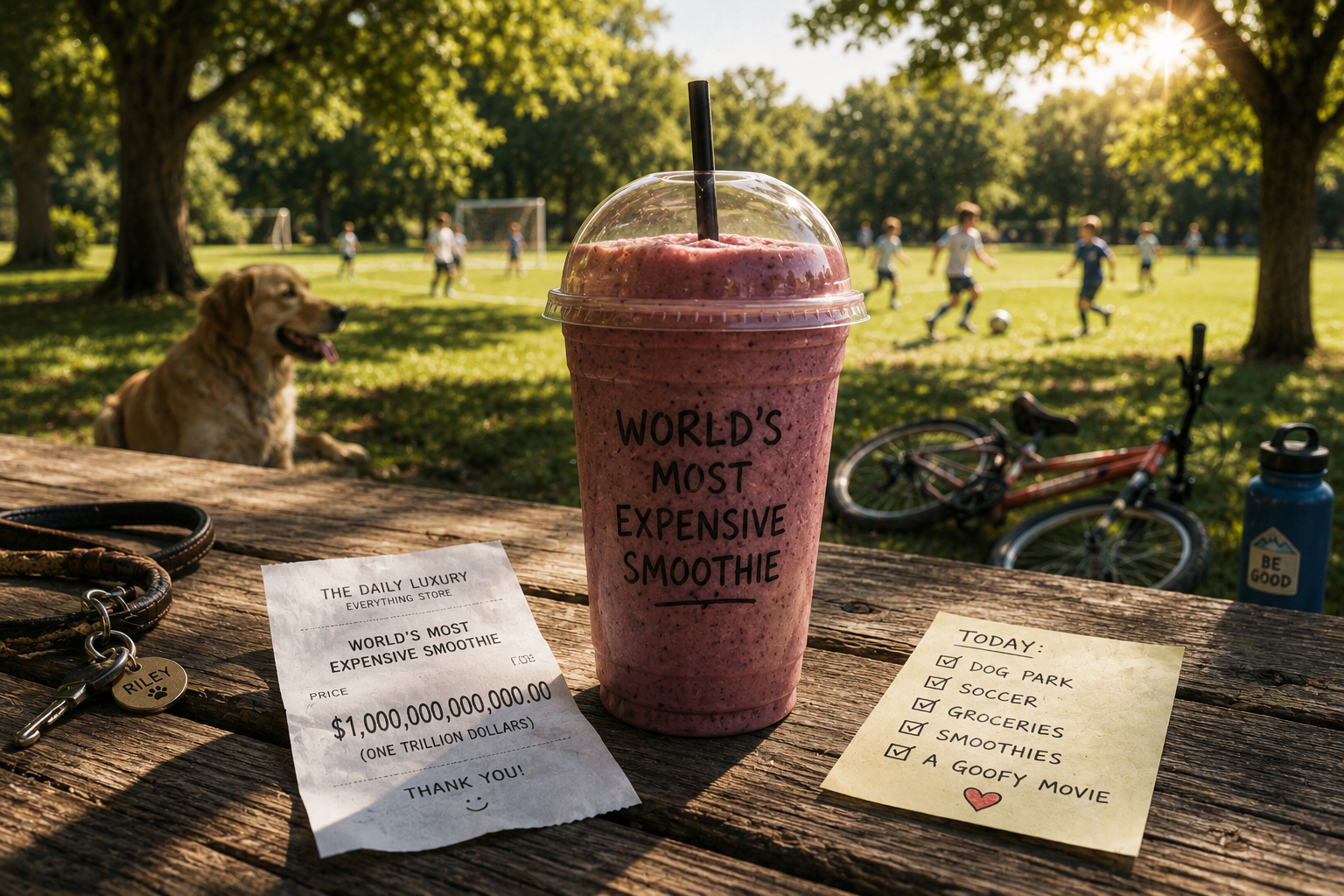
Which is how yesterday went. I still had to work most of Saturday — which sucks. But despite that we made it to the dog park and the soccer field. We watched the World Cup and listened to good music while doing chores. I took our three oldest grocery shopping and we stopped for smoothies on the way home, just because it was sunny and refreshing. We ended the night watching A Goofy Movie on the couch because it was Father’s Day.
I want to be able to afford days like that.
Faith But No Expectations
On preparing your soul to find the ones you love.
I wrote a short story once about heaven.
I thought then that God might be the unassuming owner of an ice cream shop that we simply find ourselves at. We’d be peaceful, discovering only later that this wonderful, charming place was heaven — and that the gentle man serving us a sundae was indeed God.
Maybe that’s what it’ll be. But probably not.
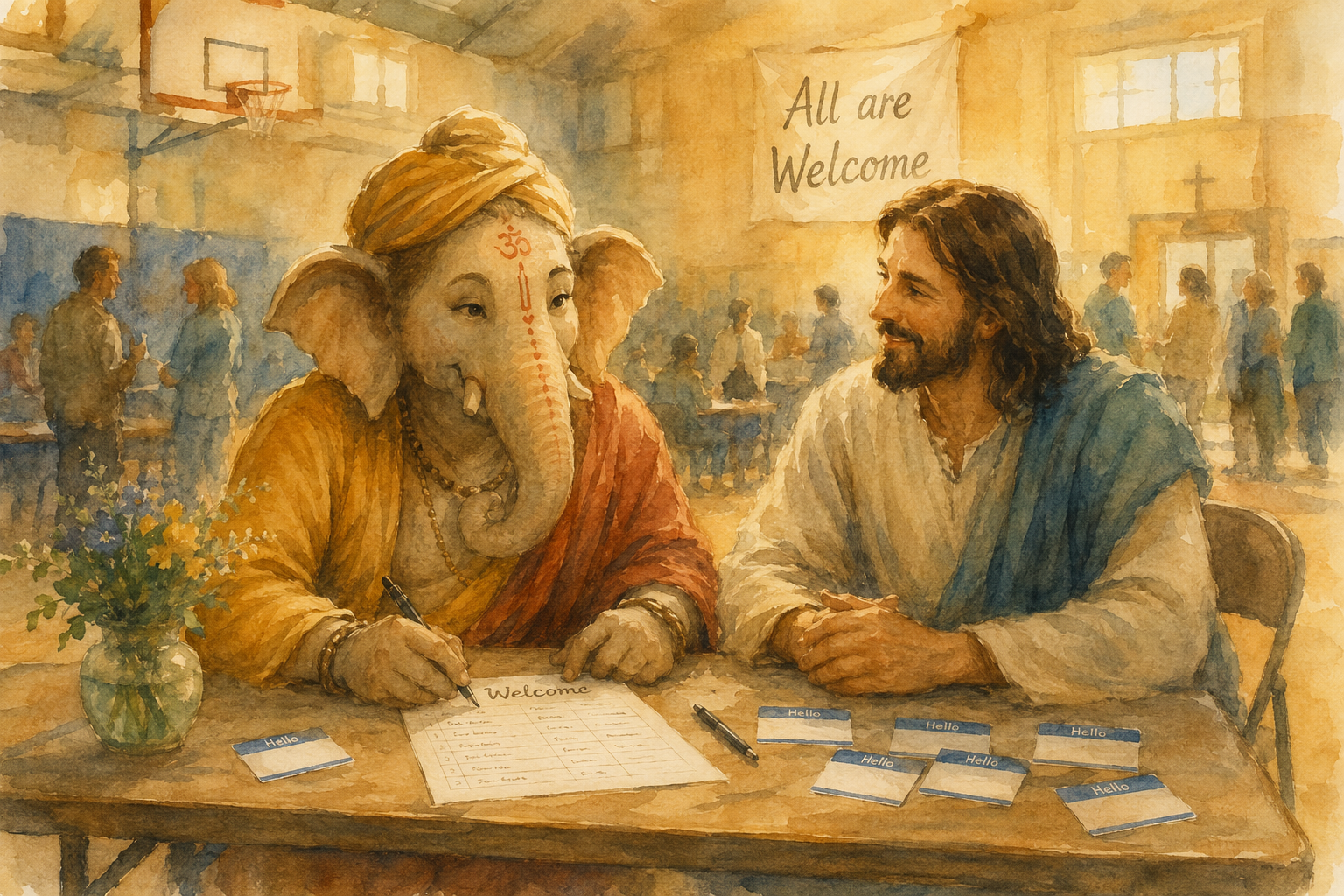
As I’ve aged, I’ve had this pulling thought, a vision perhaps, that my first foray into heaven will be more like a community meeting. Lord Jesus and Lord Ganesha sitting together at a table, old friends, checking my name off a sign-in sheet. They’ll give me a name tag. I’ll wander into the gymnasium and see my father and Nakul, and then I’ll look for you. From there, the afterlife will unfold.
The vast majority of the time I spend in the universe will be as dead. I will live maybe 80 or 90 years — a few more if I’m lucky — and then billions of years dead. There may be no “time” in the afterlife, but if there is, I will be dead for much longer than I am alive.
And for all my fantasies about the afterlife, they could be too elaborate. There may be no embodied part of it, where others appear as bodies. There could be no seeing, no talking, no hugging. It could just be my soul — bodiless and faceless — moving amongst other souls, commingling with each other and with God, finding peace and unity. It could just be essences of all of us, finding our way in a spiritual plane where we have no sense other than an intuition of one soul knowing another.
These are just fantasies, a way to cope with the fear of death, and for me, the fear of an eternal loneliness. I don’t know what the afterlife will be like, or if there even is one. But I have faith in it.
I believe things that seem to contradict. I have faith in the promise of the resurrection, but the theology of reincarnation also makes sense to me. I feel both in my bones. In many ways, I don’t care much about the specifics. I have faith but no expectations.
My biggest hope, if God grants us an afterlife in unity with him, is you. My wife, my sons, my family, my friends. My greatest hope for heaven is that you are there. I want my soul to dance and embrace yours in this timeless spiritual plane. I don’t know how my own soul can find peace without you.
But how will I know it’s you? If I have no body and neither do you. If I have no sight, how will I know? I may not be able to speak, or hear you. My soul has no eyes, no mouth. My soul must be able to simply sense you. Energy recognizing energy, love recognizing love, immaterial recognizing immaterial. My soul must be able to know you.
For it would be a fate worse than death perhaps, to be a soul in heaven that cannot sense you. That cannot know you.
To prepare for death, I’ve come to believe, is not just to accept it. It is not just to prepare for the thing itself. It’s also to prepare for what comes after. A main enterprise of this life will be to prepare my soul — and for you to prepare yours — so that our souls can sense each other. That they can recognize each other without sight, without sound, without form. My soul needs to learn how to recognize you, so that in heaven, if there is no ice cream shop, no assembly in a gymnasium, I can come to meet you. So that I can be known to you. With you until the absolute end.
That too seems like a good way to live, even if there is no afterlife. Why not aspire to have my soul sense the unique soul of someone else — or a dog, or a flower? A soul is a lovely thing to know, in whichever living creature it comes from. Why not try to cultivate a sense of soul? To feel that our soul recognizes another, and that soul recognizes us, is the pretext for joy, peace, and love. Is that not what we should reach for?
To be wealthy, powerful, famous — even feared — is ghoulishly overrated. There is no peace in that, only the anxiety of losing it. Living to create a sense of soul not only helps us find peace after death, but in life. The delicate prize of a precious life is to be able to know the essence of others and be known — one soul to another.
A Tuesday Afternoon, Someday
On learning to stop asking and start living.
As I turn 39, I realize I have had it wrong most of my life.
As a young person, I wondered: how will I measure my life? Will I measure up? Will my life be meaningful? Will it be important?
And then I realized that was a one-way ticket to a hamster wheel that goes nowhere. So my new question became: how do I enjoy the life I have? It was all about experiences — getting the nectar out of every moment.
And then I met Robyn. And my dad died, out of nowhere. And we had four kids.
And now I think: how does one cherish life — particularly our own, and the lives of those near us? How do we cherish that which is sacred?
I will be working on this for a while, I think — just learning to cherish life, our lives and life itself. But the next evolution will hopefully come. Where I no longer need questions to anchor on. When I need no blog post to share what I’ve grown into thinking. Where I just cherish life because it’s a Tuesday afternoon and a person is in front of me. Or it’s a Saturday morning and there is a plant to tend to in the garden.
When I am able to just be someone who thinks not of worth and worthiness, not of sensation and experience, not even of holiness — I will have arrived. When I just am, without thinking, without needing to ask a question: that will be perhaps the final stage of growth for a soul like mine.
I could have always known that asking questions like “what makes a life worth something” was a fool’s errand. What I didn’t anticipate was that the real evolution of this path was asking no questions at all — that it was just living, radiating gratitude, cherishing by simply being an open-hearted soul.
What is family? What is holiness?
It is being valued as important without the need to prove it.
There is a T.S. Eliot quote our pastor shared at a homily recently that stuck with me.
“Half the harm that is done in this world is due to people who want to feel important. They don’t mean to do harm—but the harm does not interest them. Or they do not see it, or they justify it because they are absorbed in the endless struggle to think well of themselves.”
There are a lot of ways to define what a family is. One is this: family are the people to whom you do not need to prove that you are important.
This touches on a fear that undergirds how I show up as a father. I fear losing a son to suicide—that they’ll feel their life is unimportant. The pressures of being kid today, that are beyond what I ever carried, rattle me. I want them to know that they matter to me, that I love and value their mere existence, without condition, without pretense.
To embrace someone as important, without requiring them to prove or justify it, takes a kind of moral strength. It’s easier—though not trivial—to love your spouse and children this way. But what about friends? Neighbors and colleagues? Strangers? Enemies? What about those who try to violently hurt, exploit, and abuse us? What about them?
To value and love them is harder. To embrace them in a way where they do not have to prove and justify their importance? I think that’s a way of defining another elusive concept: holiness. To embrace, wholly, those people who are not already part of your community, and that may even try to destroy it? To see the value and human dignity in them? Without condition or pretense?
That’s holiness.
—
With all this, I wonder.
How much of injustice, of violence, perhaps of senseless suffering even, disappears. Just disappears, if those who yearn to be seen and valued feel important. Without condition and without pretense.
How much of that disappears with holiness?
I Do Not Want An Identity
Identity is a shortcut for you to know me. I don’t want to need it.
I do not want identity. I do not want to be a brand.
I do not want you to know I went to school in Ann Arbor because I’m wearing the hat. I hope you believe I appreciate diverse perspectives and am committed to a better world because of how I treat you.
I do not want to wear a cross around my neck — as big as Flava Flav’s clock — for you to know I’m Catholic. I hope that because of how I care for others, and if I show up humbly and peacefully, that you would have reached that conclusion on your own.
I do not want you to have to see the idol of Lord Ganesha in our cabinet to know I was raised Hindu and have it enmeshed in my blood and bones. I hope that if I am truthful, dutiful, and righteous in thought and action, you would have just assumed as much.
I do not want to drape a flag over my shoulders or tattoo it on my arm for you to know I am American. I hope you will grasp that from my work ethic, my leadership, my creativity, and my respect for your life and freedom — that you can just tell: that man is a yank.
I do not want a bumper sticker or license plate to reveal that I am a Michigander and Detroiter. I hope that grit, amiability, and a community orientation ooze out of me so naturally it seems obvious.
I do not need these reminders. I do not want to need these symbols. I do not want an identity outside of the driver’s license in my pocket. I do not want a self-aggrandizing logo on a t-shirt to signal what I’m all about. I do not want these shortcuts — these shorthand descriptions of a life — to speak for me.
I want my actions, my professions, my sacrifices, and my works to speak for themselves.